Wols - Enhancing social interactions
The problem
I went out to eat with my wife and looked around - everyone was buried in their phones. They were with people, but yet distant, and this got me thinking. When I got home, I began my research. What I found out was shocking, not only where phones changing our social behaviors but most people I spoke to understood this behavior to be unpleasant to give or receive but often times, could’t help it. What was even more shocking was the business impact it was having, of customers on their phones, distracted…how it affected the companies bottom line & customer experience.
The approach
Our hypothesis was that if the phone played a big part in changing our social norms, of being more engaged in our devices then in the people they where eating with or the dining experience they chose to enjoy - then the phone would also play a part in changing our social norms, but for the better. Instead of going phone free, using the phone to provide visceral feedback, other focus mindset and financial incentives. As with all my projects, my approach is lean, focus on learning, fast to create & test, fast to fail and using what I have around me, to test my hypothesis without much investing in pixels, code, ect.
Feedback loops , AI & business models.
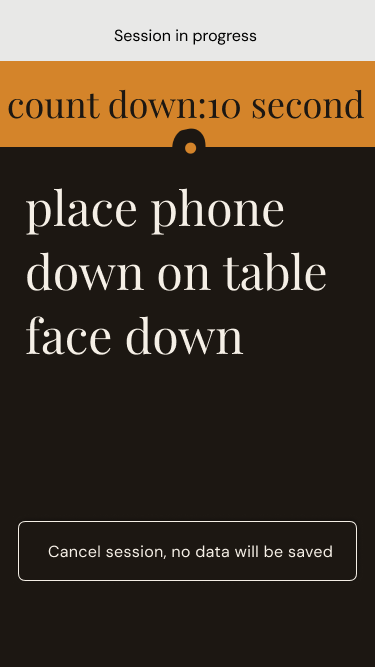
After some quick interviews, and testing I noticed that I would need to ensure users have control of their experience and have the flexibility to adjust it accordingly. The feedback mechanism relied on haptic motor for vibration (touch feedback), phone flash/screen(visual feedback) and alert (sound feedback) to remind the user to place their phones back down when they consciously or subconsciously pick up their phone out of habit or desire after committing to not picking it up. I quickly found out that contexts/location and accessibility matters in that some folks would want to use all feedback mechanism, some would use a few and others only the ones that they could benefit from. This feedback loop was a short loop and one that relied on reinforcement model and needed more research. Our approach of the app is one that called the user to take things slow (slow spelt backwards is wols) and enjoy the moment with the person across from them, the approach is not one of “do better” or “you need this” but one of service, aligning the app with the persons natural desire to enjoy the other persons company and not have them enjoy their company - this is where AI comes in.
Use of AI
We use AI after conversation/interaction and serve as a second brain & social coach. Helping to remember things about the conversation you would want to bring up again and ways in which you could have listen better, asked better question, ect. Boosting your emotional intelligence. Our approach was not one of recording the conversation and getting a summary, we felt that was too “disconnected” and relied on the computer to do all the heavy lifting of listening and retaining. We wanted the interaction with our AI model to be close to what someone might already experience, leveraging a current mental model, the likes of a friend who you would call to debrief after a lunch or dinner chat with a friend/family/co-worker.
Crafting a business model
From the beginning of this project, I knew there was a business component but didn’t know what they would look like. After much research, I noticed several business putting signs of “no phones” or even discounts offered if people put there phones away in a box/bin/jar,ect! This caught my eye, along with my research I found that the threat of phones to business bottom line was 3 specific effects of phone uses that needed to be address. We crafted a paid program to business that would help them address these 3 specific issues but we knew business would need an experience that required less commitment, friction, setup and financial cost then our paid version. We came up with a “lite” version of the app, which was one of the hardest things to craft but one that brought me great joy knowing it would help customers and business.
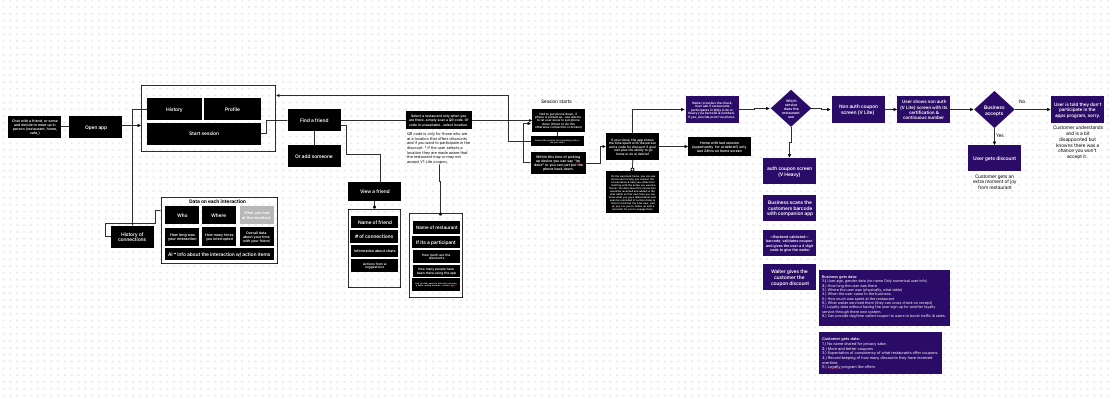
Protoyping AI to learn the dynamics of interactions, relationship & it’s pace in assisting
Drafted the prompt with the help of ai to create a prompt that would tell ai what to do. This part of the app, the “debrief mode” could be texted or spoken. The data from this app enhances your next conversation or interaction and helps you be proactive in your relationships and strengthens your emotional intelligence through tips. The prototype was made with ChatGPT & figma another version used base44.
Designing for transparency and yet also confidence.
We also wanted to give the user(s) and understanding that ai is probabilistic and not deterministic and will make errors. Yet, we wanted to instill a level of confidence in the ai ability given high quality data, good prompt, ect. We wanted the user to be in control of their data, outcomes and health and play a part in making the model better so that they can get a better experience overall. If the confident translation score isn’t high enough for the user, they can edit and or correct the transcription on the spot.
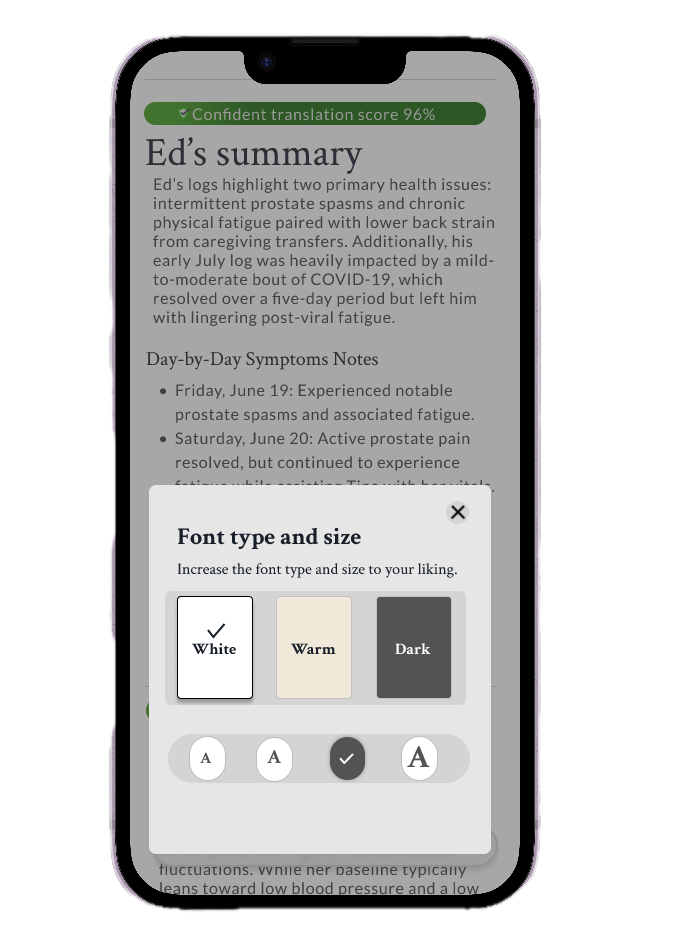
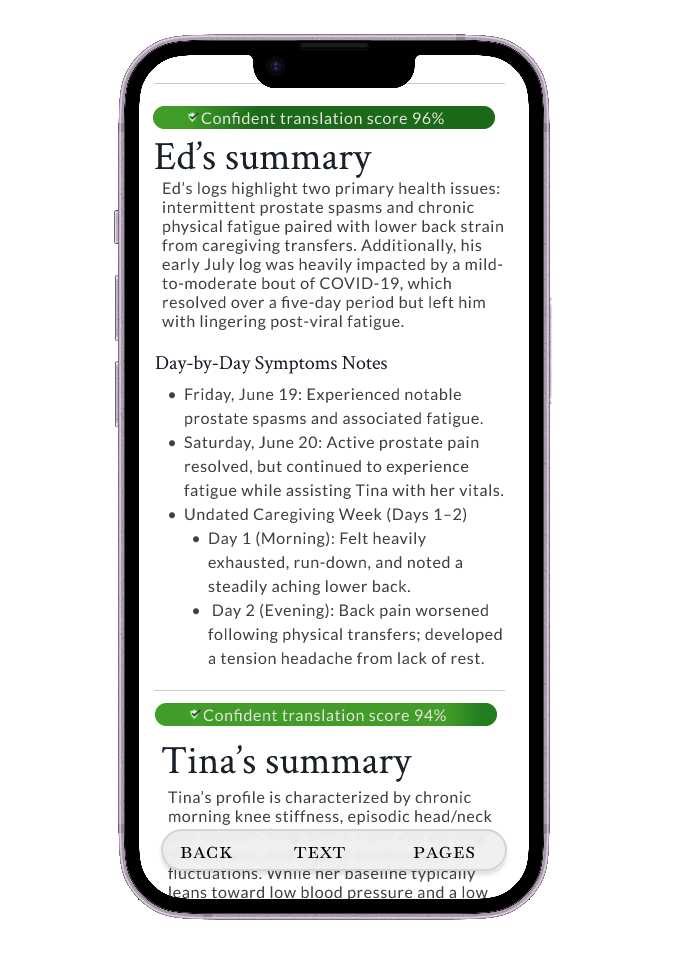
Audio and text are two of the most common form of output in AI models and has become what people expect, a developing mental model. Text is the most common output in ai apps but their structure sometimes are not design with reading in mind, at least from my observation. We decided to change how reading ai output looks and feels in our “Summary”. The summary has controls we have come to know and use such a “reader mode” on the web. The readability and accessibility of the output is just as important as the audio recording quality and AI analysis so we created an experience just for that.
If output is primarily text, make reading accessible and customizable so that customers can better digest the summary.
The next step
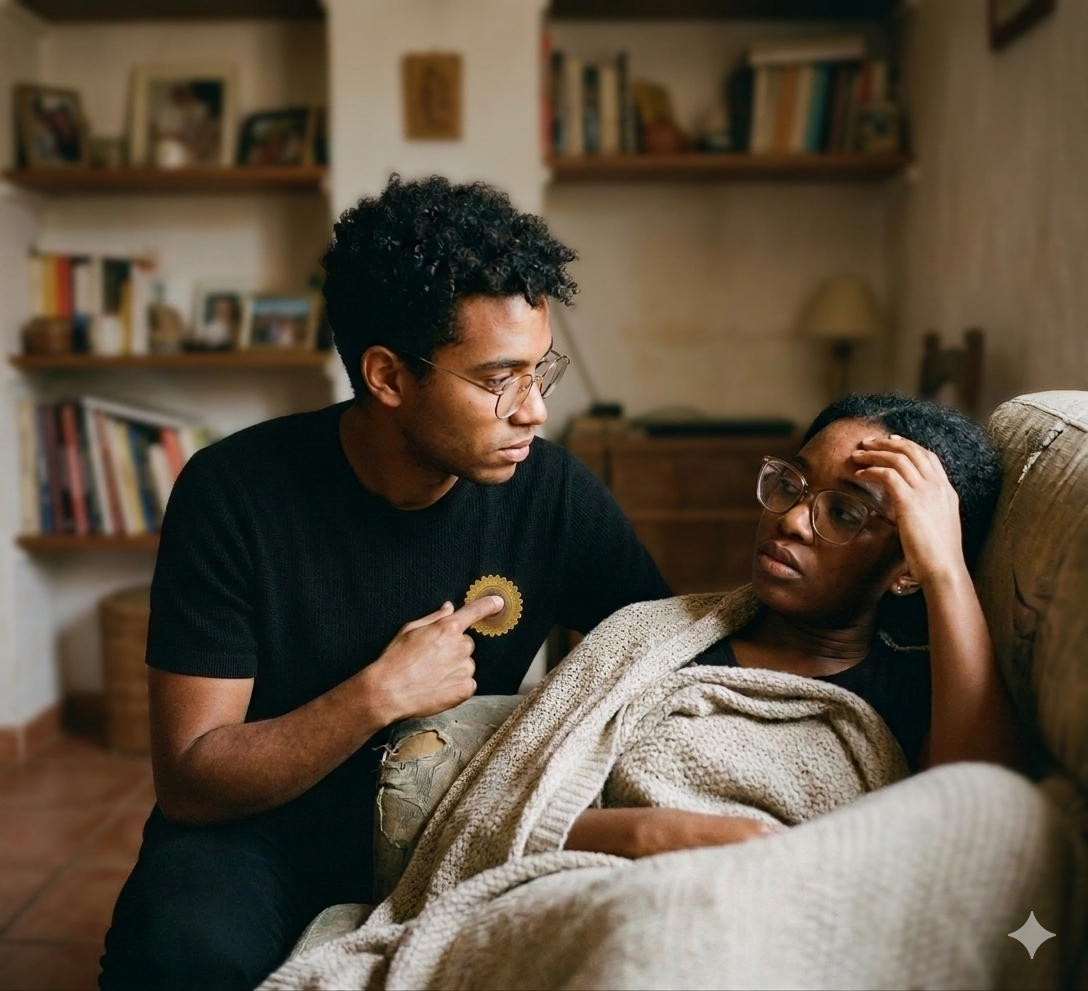
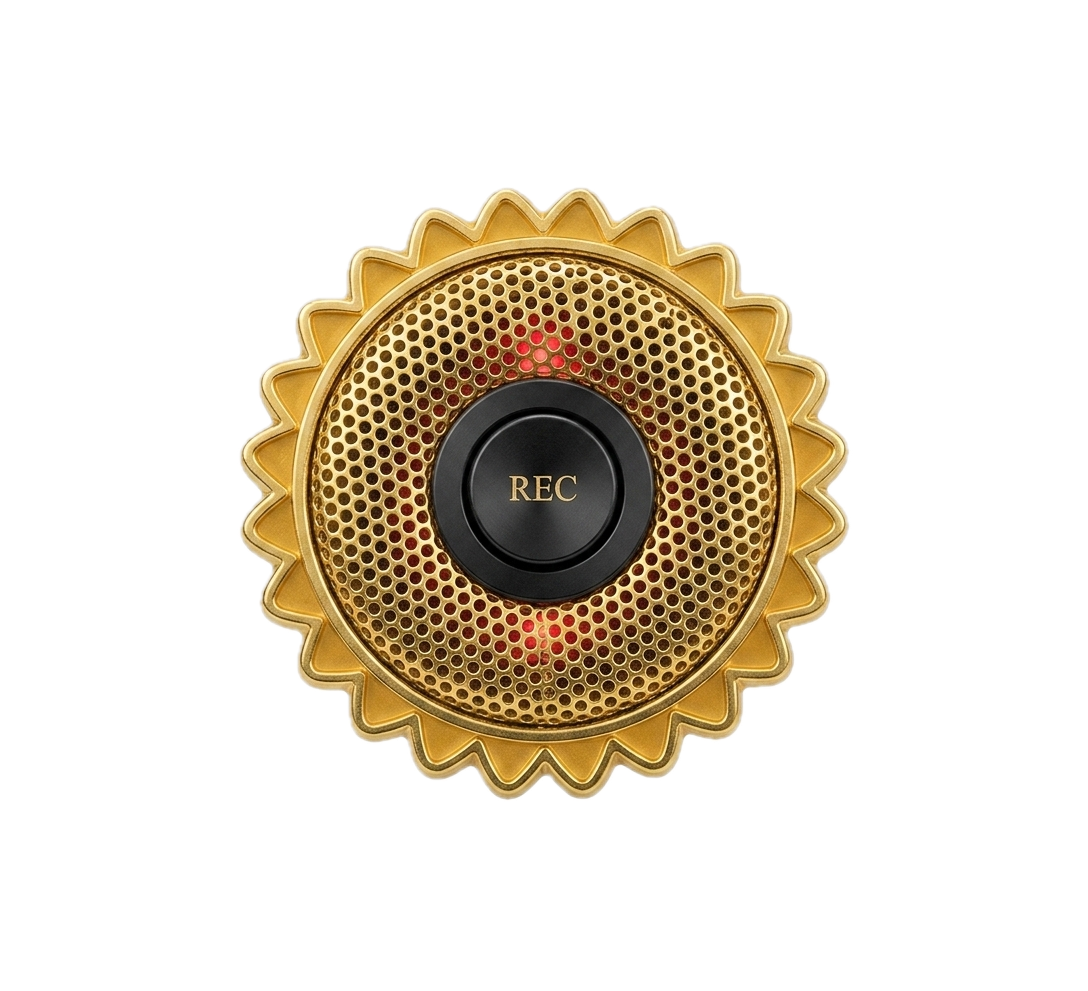
In the next evolution of caregiving app (Care Give Track -App), we turn to physical product, 1 button experience that has 1 objective, listen/transcribe/analyze. Physical pin ensures the device is always on you, serves as a symbol of awareness and has an easy user experience. We leveraged the universal symbol of invisible disabilities (Sunflower) as one of the pin options for the caregiver and or care recipient.